COURSE STRUCTURE
MODULES
Each semester and each mandatory mobility period must result in the completion of 30 ECTS credit points at one of the partner institutions. Virtual teaching activities are part of the learning experience, but physical mobility of students cannot be replaced by virtual mobility unless force majeure (e.g., a pandemic) necessitates different temporary solutions. Download our Module Handbook for details.
During the first semester, all students complete a core curriculum of courses/modules at Ruhr University Bochum (RUB), Germany, in a face-to-face format. These courses will equip you with the basic tools required to understand the study of the post-industrial city. Modules will provide a substantial foundation of content knowledge that is facts and ideas as well as the theories that connect them, in the context of a conceptual framework of the post-industrial city.
The semester kicks off with a welcome week, followed by the RePIC Core Theory and RePIC Research Forum modules that are delivered face-to-face. Another key component of this semester is the Research Methods I module. It will enable you to assess research work and to be able to make decisions about research design. The first semester concludes with a field trip to Cork, Ireland, where UCC conducts a CityLab in mid-January. Here, you will explore the potential for the post-industrial city to act as a milieu for continuous civic immersion asking how it can be cultivated to inform cultural and social dissonance. You will actively assess challenges around the uses of public space such that it informs current understandings of social and public discourse through experimental ethnographic and servicelearning approaches and in collaboration with community groups, specialist researchers and other actors in a team-based approach. Apart from skills and insight, this didactic concept serves to form a joint cohort and to connect RePIC staff and students.
Courses in the first semester include:
- CityLab I & Design Research Studio: Urban Analysis, Digital Design Strategies & Design Visualisations
- Research Methods I Quantitative, Qualitative and Geospatial Methods & Data Literacy
- RePIC Core Theory: The Post-Industrial City - Society, Space and Environment
- RePIC Urban Sustainability Transformations Research Forum
In the second Semester, you will decide on one of four thematic specialisation tracks - where each track is jointly delivered by two partners. Depending on the track chosen, you may move to another university. The four hosting universities are supported in content delivery by the four other RePIC partners through online lectures or faculty visiting the host university. Access to each track is limited; we will seek to distribute students as equally as possible over the four tracks and you will be asked to state your preferred track in your application. The RePIC Admissions Committee reserves the right to place students in tracks that may differ from those indicated in their application form to ensure a balance between the tracks.
Track options, locations and courses offered:
University College Cork & University of Liège
Classes@UCC
Track 1 “Urban Transformations and Resilience” (offered at UCC in Cork with ULiège) positions the socio-spatial tensions in post-industrial landscapes as representing a unique opportunity to test multiple latencies that these places hold and questions how they become subject to a process of transformation.
Adopting critical and experimental thinking practices and the theme of “salvage” (of space, form, material, landscape), this track will consider critical ideas that deal with issues and questions of contemporary relevance for the city. It will question the continuous challenges within the historical and post-industrial city (preservation, identity, access) and the aspirations of a contemporary urban conglomeration (infrastructure, climate, inclusion). It will position the socio-spatial tensions in post-industrial landscapes as representing a unique opportunity to test multiple latencies that these places hold – distinct temporal, social, technological and cultural fields – and questions how they become subject to a process of transformation or “renovation”. The track will adopt new and innovative approaches towards engagement (co-design, participation-based, live projects) and use new representational modalities to explore the physical landscapes and built infrastructures within the post-industrial city.
Working with a community of local authors and actors, it will act to critically resituate and redefine the city in surprising and new ways. Including a Seminar Series, it draws upon a range of key thinkers on the city and demonstrates the significance of innovative and interpretive concepts as the basis to generate creative and critical insights into contemporary urban and cultural issues. Attention is given to the relationships between social theory and research design in contemporary urbanism, human geography and related areas. Through the Research Methods II module, students will look at interactions between real world spaces and digital mediations of these spaces – the aim of which is to assist the learner acquire a wide range of critical and creative skills. This will be facilitated by a variety of experts from various disciplines using digital filmic and other immersive research techniques.
Courses offered:
- Conceptualising Society, Space and the City (10 ECTS)
- Research Design Studio: Salvaging and Transformations of the Post-Industrial City (15 ECTS)
- Research Methods II: Digital Storytelling and Immersive Fictions (5 ECTS)
Koç University Istanbul & Erasmus University Rotterdam
Classes@KU
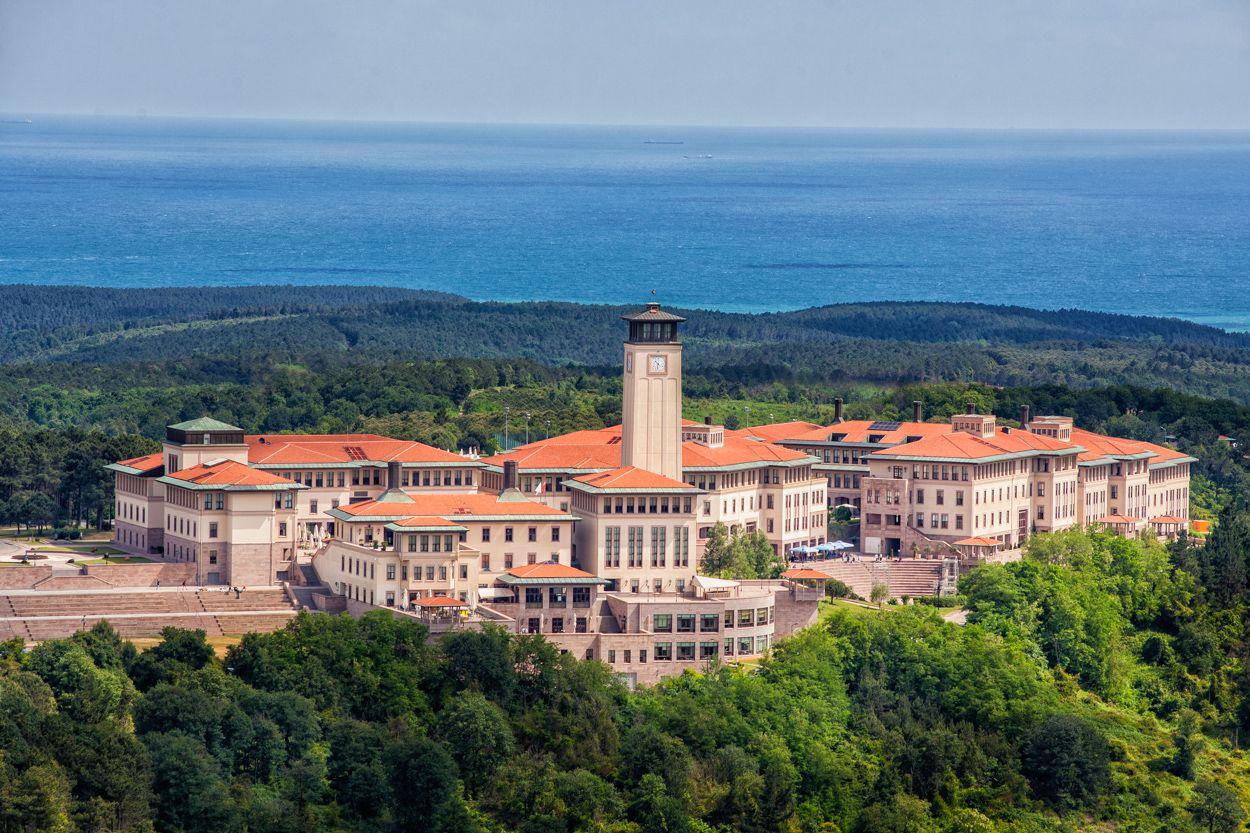
Track 2 “Inequality, Diversity and Social Justice” (offered at KU in Istanbul with EUR) focuses on recognising, understanding and explaining inequalities and diversities, and on designing innovative approaches to improve social justice in the post-industrial city.
Challenges and problems faced by post-industrial cities are often multidimensional societal issues, shaped by a complex interplay of inequalities, diversities, and historical path dependencies that are resistant to policy interventions. Addressing these challenges requires not only conceptual understanding but also the capacity to operationalize justice in real-world urban contexts. This track builds on the theoretical and methodological foundations established in the first semester, equipping students with critical tools and design approaches to analyze urban inequalities and develop strategies for advancing social justice, equality and diversity in post-industrial cities.
Across five interconnected modules, students will engage with theoretical perspectives on justice, inequality, and diversity, while developing methodological competencies for analyzing and designing solutions. A strong emphasis is placed on the integration of theory and practice, with students collaborating with urban stakeholders to co-develop interventions that promote inclusion and justice. Through these engagements, students will gain hands-on experience in critically examining urban settings and applying design thinking, participatory methods, and spatial analysis to address pressing urban injustices and inequalities.
This track brings together multiple disciplinary perspectives - drawing from design, political philosophy, sociology, communication, and urban planning - to address the complexity of justice, diversity and equality in post-industrial urban contexts. Students will be introduced to diverse research methodologies, including qualitative, quantitative, participatory, and design-based approaches. By working on real-world cases, they will critically assess how diversity is and can be shaped and practiced in urban environments, and develop contextually grounded interventions.
Courses offered:
- The City in Visual Culture (6 ECTS) - Face-to-face @ Koç University
- The Production of Social (In)Justice in the (Post-Industrial) City (6 ECTS) - Online
- Social Design Studio: Justice and Diversity (6 ECTS) - Face-to-face @ Koç University
- Design for Health and Wellbeing (6 ECTS) - Online
- Research Methods II (6 ECTS) - Face-to-face @ Koç University
Ruhr University Bochum & University of Oulu
Classes@RUB
Track 3 “Urban Analysis: Smart, Sustainable and Resilient Cities” (offered at RUB in Bochum with UOulu) focuses on a set of diverse and complementary methodological approaches to our understanding of the post-industrial city including Architecture, Geoinformatics, Remote Sensing, Urban Climatology and Environmental Planning.
The post-industrial city, understood as a coupled human-environment system, is subject to both challenges and opportunities for attaining the UN Sustainable Development Goals. As the global mega-trend of urbanisation continues and the urban share of the world population is expected to increase from about 55 percent in 2018 to 68 percent by 2050, fundamental urban transformations are urgently required to attain these goals. Understanding the highly context-specific needs for transformative change of urban areas, accounting for simultaneous changes of ecological and human properties towards more sustainable pathways, is therefore of high societal relevance. Evidence-based sustainability transformation processes in the post-industrial city require appropriate expertise to analyse current and picture future developments of smart, green and resilient spatial patterns, gradients, connectivities and their dynamics. To move forward, it is important to incorporate different disciplines conceptually and analytically. Therefore, the track focuses on key methodological approaches as well as methods of acquiring and analysing (digital, geospatial) data, including Architecture, Geoinformatics, Remote Sensing, Urban Climatology and Environmental Planning. Multi-disciplinary approaches adopting multi-scalar, multi-actor perspectives on spatial phenomena help to identify relevant thematic crossovers and intersections, leading to new insights.
Courses offered:
- Integrative Urban Development (5 ECTS)
- Environmental Urban Planning (7 ECTS)
- Urban Remote Sensing and Smart Data: Modelling the Post-Industrial City (7 ECTS)
- Urban Climatology (6 ECTS)
- Research Methods II (5 ECTS)
University of Zagreb and University of Deusto
Classes@UniZG
Track 4 “Governance of Post-Industrial Cities” (offered at UniZG in Zagreb with UDeusto) provides the theoretical and practical accommodation of sustainable governance in urban development processes through the disciplinary lenses of Law, Architecture and Urban Planning.
This track provides the theoretical and practical accommodation of sustainability governance in urban development processes. It is divided into three modules carried out through interdisciplinary collaboration of faculties of law, architecture and urban planning. The first module aims to train students in the management and knowledge of the theoretical foundations, principles, criteria and strategies, new challenges and problems related to the different areas that make up the concept of sustainable urban development: environmental, economic, social and cultural development. Providing students with the foundations to critically assess the interrelationships between environmental, cultural, economic and social processes in the production and development of a resilient habitat, endowed with identity, quality of life and opportunities framed by a holistic, multidimensional, cross-sectoral and cross-cutting vision.
The second module aims to train students in the management and knowledge of the theoretical foundations, principles, criteria and strategies, new challenges and problems related to the different areas that make up the concept of urban governance, particularly with administrative and institutional aspects of local self-government in urban areas, implementation of EU Cohesion Policy in urban settings, local/urban public services (services of general interest) and management of urban migration. The third research module addresses the need to shape a governance model for the achievement of the proposed sustainable urban development. It aims to provide students a method of analysis, design and evaluation of a governance model for sustainable urban development, based on action research. The application of city governance from the reality of projects, in institutional, business and associative practice, will be worked on. Reviewing instrumental aspects, such as the use of specific tools linked to the management of city governance projects, citizen participation in these processes, the world of data and impact assessment.
Courses offered:
- Sustainable Urban Development Governance (10 ECTS)
- Governance of Post-Industrial Cities (15 ECTS)
- Research Methods II (5 ECTS)
In the third semester you can decide between in-depth studies and practical training in a profession or in research at either University College Cork/Ireland or at University of Liège/Belgium.
Focus at UCC (50 % of the cohort): structured learning activities and engaged research placements
Focus at ULiège (50% of the cohort): in-depth studies in three domains (Urban Mobility, Urban Ecology, Urban Economics) related to the transformation of the post-industrial city and supervised by Prof. Dr. Jean-Marie Halleux, Prof. Dr. Jacques Teller, and Prof. Dr. Martina Barcelloni Corte.
Courses offered:
- CityLab II: Early September, 10 credits, face-to-face.
- Research Methods III: International Seminar to further develop your understanding of research methods, introducing more complex forms of quantitative, qualitative, geospatial, design and mixed methods approaches, 5 credits, EUR, online
In the fourth and final semester, and considering the multidisciplinary nature of the programme, you can choose among three forms of master dissertation/thesis:
- Traditional dissertation
- Research manuscript aiming at publication
- Practical project accompanied by documentation
Suggestions for thesis topics will be made available to the RePIC students at an early stage of the programme. You will spend your time conducting research and writing your thesis under the supervision of one faculty member of your semester host university and one faculty member from a different RePIC university. You can choose to conduct your dissertation/thesis work at one of the following eight RePIC universities:
- RUHR- UNIVERSITÄT BOCHUM/GERMANY
- UNIVERSITY COLLEGE CORK/IRELAND
- UNIVERSIDAD DE DEUSTO/SPAIN
- KOÇ UNIVERSITY/TURKEY
- UNIVERSITÉ DE LIÈGE/BELGIUM
- UNIVERSITY OF OULU/FINLAND
- UNIVERSITY OF ZAGREB/CROATIA
- ERASMUS UNIVERSITEIT ROTTERDAM/NETHERLANDS
UNIC CITYLABS
Throughout the programme, there will be several collaborations involving community groups, academia, and specialist researchers. This will involve team-based practices and co-design approaches – and align the curriculum with specific CityLab challenge areas in different European cities. UNIC runs CityLabs across all its European campuses.
UNIC CityLabs facilitate the collaboration of students, researchers, city stakeholders, organisations, and citizens to identify local societal challenges, co-create solutions to these problems, and ultimately implement the created solutions locally to drive societal change in post-industrial cities. CityLabs address this urban agenda in many forms including workshops, hackathons, sprints, panel discussions, interviews, courses etc. Explore the Open Case Repository to learn more.